
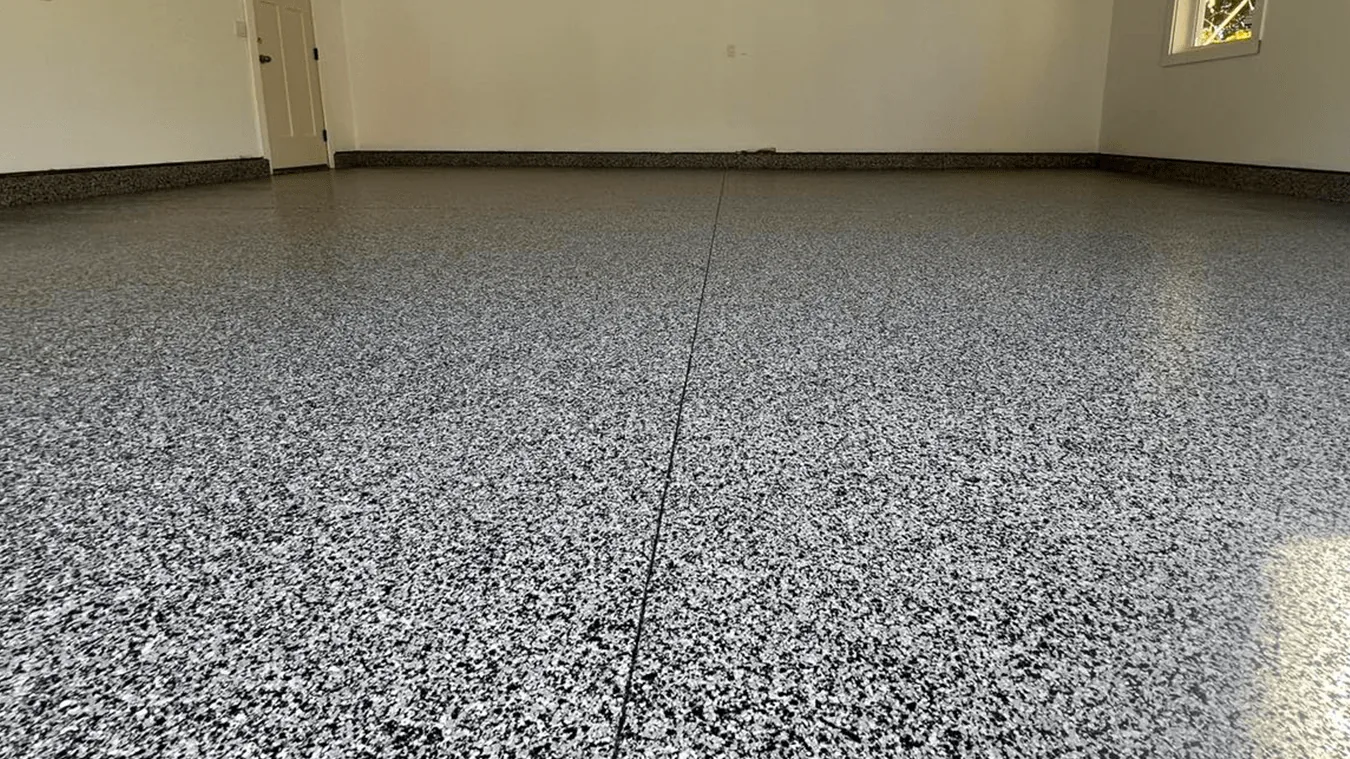
How soon can you coat a new construction garage floor?
Plan on at least 28 to 30 days after the concrete is poured. That is the minimum in the coating data sheets we read for this guide. After that, a moisture test on the slab decides the day. In a wet Central Florida summer, a new slab can need weeks more.
Census Bureau estimates show Polk County grew by 149,748 people from April 2020 to July 2025. That was the 8th largest gain of any county in the country. Census permit data show Haines City alone authorized 1,733 new single-family homes in 2024. Armor Garage Flooring installs garage floor coatings around Lakeland and across Polk County, new homes included.
How long does new concrete need to cure before a coating?
Of the coating data sheets we read, two ask for 28 days of cure and two ask for 30. A resinous flooring manufacturer says extra water in new concrete must leave first, or the coating can bubble or peel. It warns that new concrete can look dry well before it is ready.
The same manufacturer says local temperature and humidity can stretch the wait to 60 days. The concrete trade’s education series says most new slabs cannot dry fast enough to meet flooring moisture limits. Even indoors in good conditions, drying can take weeks to months.
Rain or construction water on a slab lengthens drying, the same series says. NOAA’s climate normals put about 60 percent of Lakeland’s yearly rain in June through September. So count from the pour date, then test. The same wait applies to the polyaspartic base under our flake floor coatings.
How is a new garage slab tested for moisture?
Moisture also rises from the ground. The concrete trade’s series says water vapor saturates the soil under a slab, however deep the water table sits. Large parts of Polk County are flat, sandy ground. There, NRCS surveys put the water table within 18 inches of the surface for part of most years.
The standards body behind the test methods notes that coating makers generally require moisture testing before installation. Three of its test methods are below.
| Test | How it works | What it tells you |
|---|---|---|
| Calcium chloride test | A dish of calcium chloride sits under a sealed dome for 60 to 72 hours | How fast the slab gives off moisture vapor |
| In-slab relative humidity test | Probes sit in holes drilled into the slab | The humidity inside the concrete |
| Plastic sheet test | An 18 by 18 inch sheet stays taped down for at least 16 hours | Damp means excess moisture is likely; dry proves nothing deeper down |
The concrete trade’s guidance calls for three test spots on a floor up to 1,000 square feet. Each result reflects the slab on the day of the test. The pass mark comes from the coating manufacturer. When a reading runs high, a moisture-blocking primer goes down before the base coat.
Do builder slabs have curing compounds or sealers on them?
Only the builder can tell you whether yours has one. A curing compound is a film put on fresh concrete to hold its water in while it cures. The concrete trade’s series advises against curing compounds on floors that will be coated, unless the coating maker allows them.
Coating data sheets want any compound or sealer gone before the first coat. They also want the laitance removed, the weak top layer that forms as concrete is finished and cured. A resinous flooring manufacturer describes a quick check: water that beads up on the surface points to a sealer.
We grind the concrete on every floor we coat, new slabs included. Grinding takes off that weak top layer and opens the pores so the coating can bond.
Which HOA and community rules should you check?
In the South, 68 percent of new single-family homes finished in 2025 sat in an HOA, Census figures show. Florida’s HOA law ties an association’s say over a home’s look to its declaration and published guidelines. The law also bars HOA rules on interior spaces hidden from view outside the lot.
A garage floor is inside the home, but it shows every time the door goes up. Read the declaration and guidelines before you pick a color. If the coating will run onto the driveway apron or the front entry, ask the architectural review committee first.
In a new community, the developer may still run the HOA board. Florida law lets owners elect a board majority three months after 90 percent of the lots are deeded to them. Some other events can bring that sooner.
Why coat the garage floor before you move in?
Coating before the move is a choice, and the empty garage is the first reason. A national cost guide notes the space has to be cleared for the work. Without storage elsewhere, that can mean a truck rental and a storage unit.
Before move-in, there is nothing to clear, and the floor can sit while it cures. Our main garage system uses polyaspartic floor coatings, which cure fast. Even so, the coating manufacturer’s schedule sets the day you can park, and moving day should come after it.
Tire oil is the other reason. A resin flooring maker’s help page says warm tires leave oils on bare concrete that can weaken a coating’s bond. It adds that grinding alone sometimes cannot remove oils that have soaked in deep. A slab no car has parked on starts without them.
Which flake finish suits a new garage?
A full flake floor is covered edge to edge. Chips are broadcast into the base coat until it takes no more. A manufacturer’s installation guide then calls for scraping off the loose chips and vacuuming the floor. A clear topcoat seals it.
A flake manufacturer is plain about the chips’ job: they add color and texture, and the coating supplies the resistance. Blends mix colors and chip sizes. One maker’s hybrid blends are mostly 1/16 inch chips, with some 1/4 or 1/8 inch flakes for a terrazzo look.
We offer multiple flake options and finishes to match your style. The flake maker recommends seeing a physical sample, and asking your installer for a system sample, before you choose.
Sun matters too. Polyaspartic data sheets describe the coating as UV stable and resistant to yellowing. Where flake runs outside into direct sun, the flake maker suggests skipping bold, bright colors, which can fade.
What should you ask the builder before the floor is coated?
- When was the garage slab poured? Count the 28 to 30 days from that date, not from closing.
- Was a curing compound or sealer used on it? The answer helps plan the prep.
- Is there a vapor retarder under the garage slab? Without one, moisture can rise and blister a coating, a polyaspartic data sheet warns.
- Did rain reach the slab before the garage door went in? Wetting after the cure lengthens drying.
- Do the closing papers say anything about changes to the floor?
- Who reviews HOA requests right now? In a new community, it may still be the developer’s team.
Ready for a full flake garage floor?
Once the slab is past its wait and the moisture reading fits the coating, the garage is ready. See how we install a full flake garage floor, from grinding to the clear topcoat. Call or text (866) 282-7667 for a free estimate.