
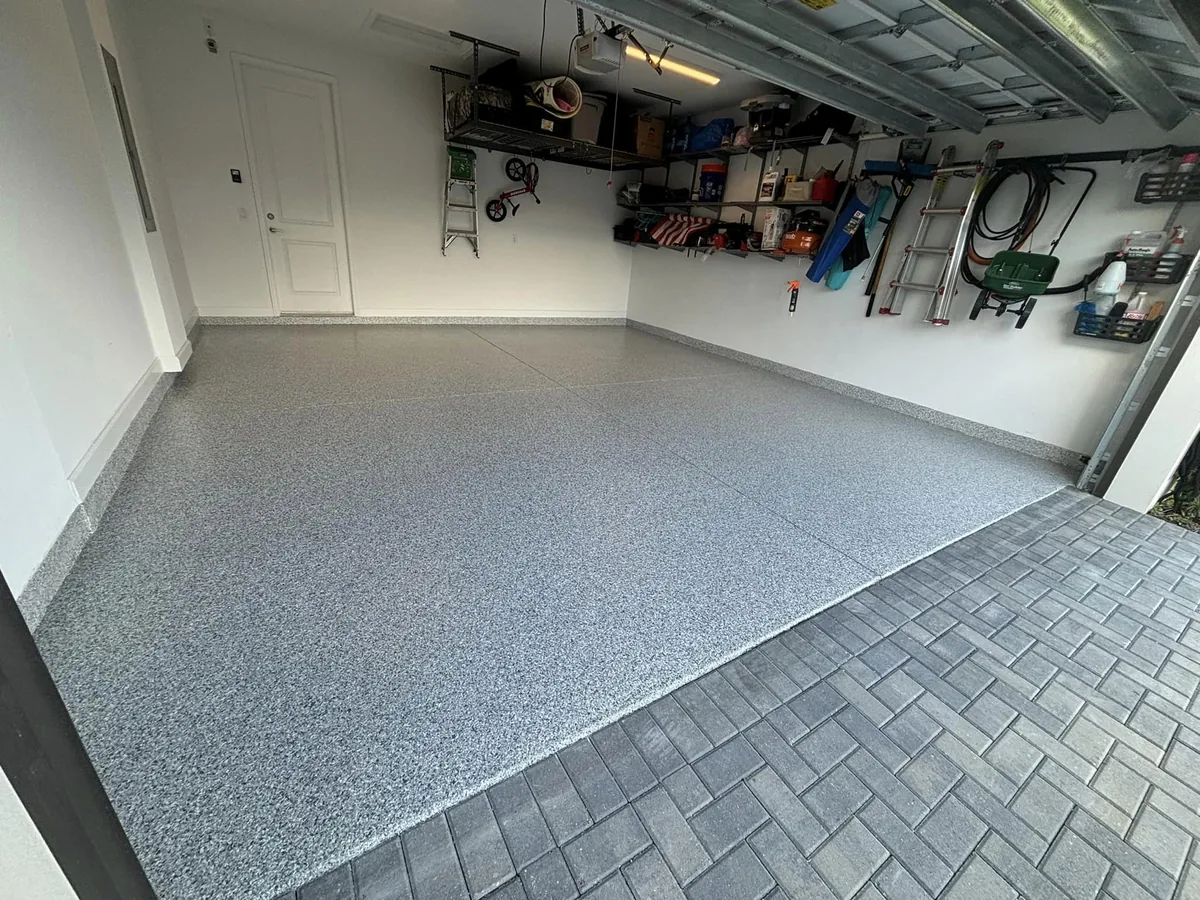
Polyaspartic Coatings
Our main garage floor system pairs a polyaspartic coating with a full flake broadcast. It cures fast and holds its color in the sun.
Learn More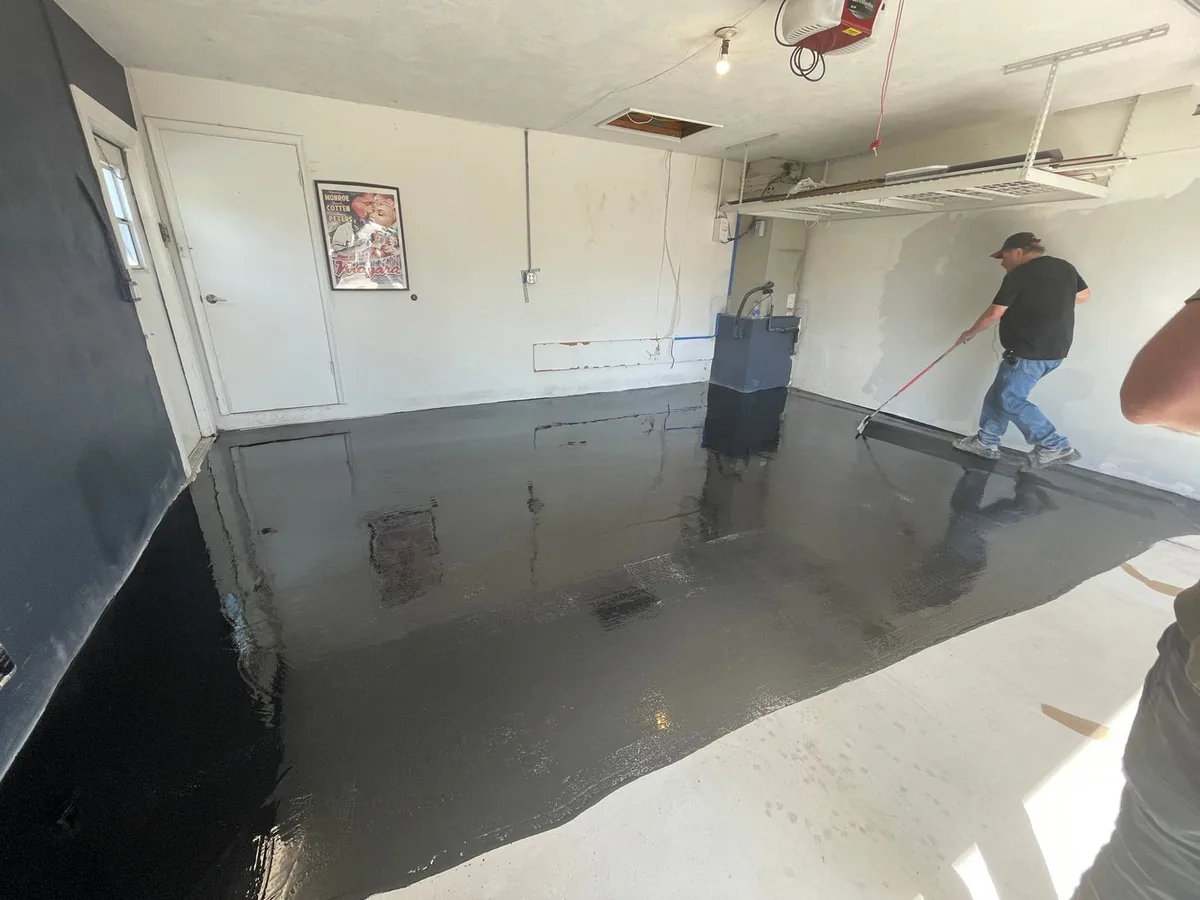
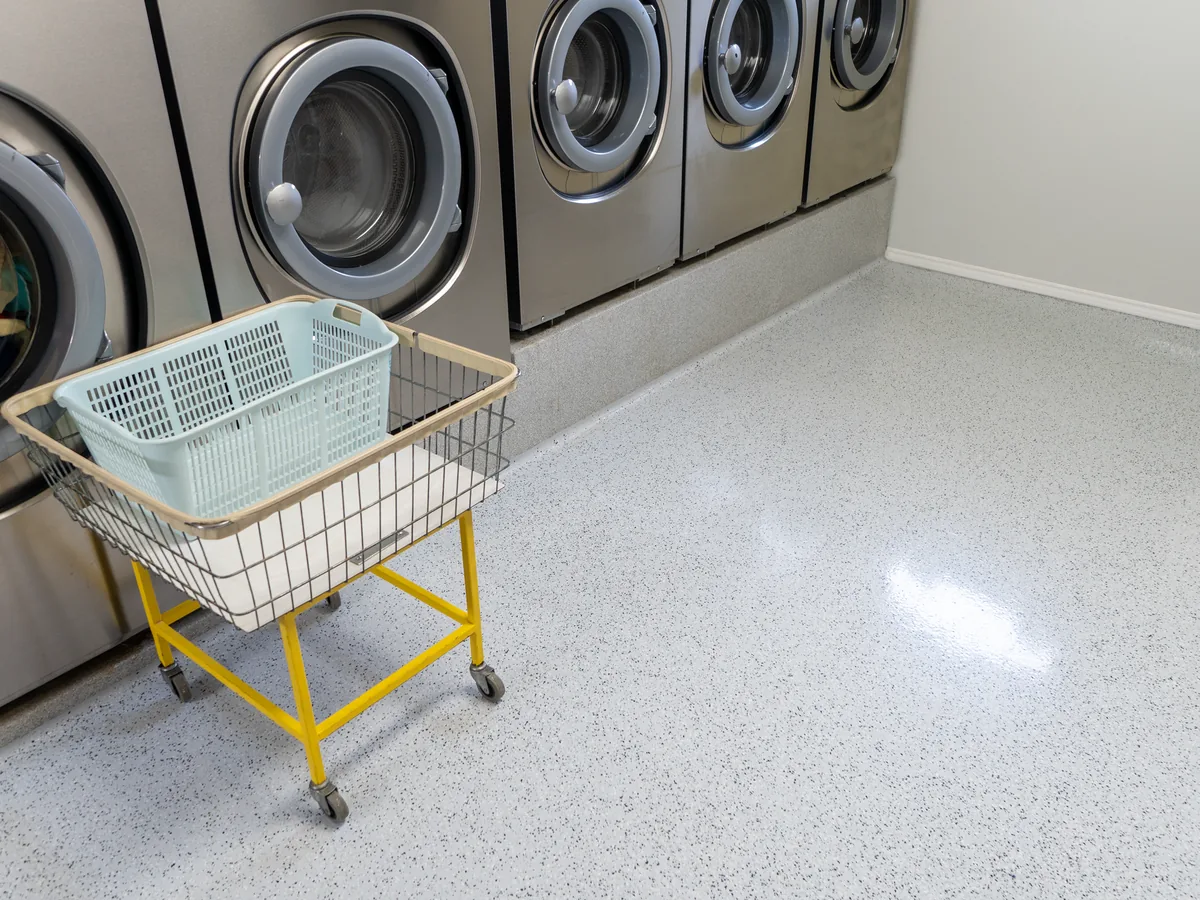
Armor Garage Flooring installs epoxy floor coatings on interior concrete in Eagle Lake and across Polk County. Our epoxy system is for workshop floors, utility and laundry rooms, basements and commercial floors. It ends in a sand finish: sand broadcast into the wet epoxy for grip, then sealed under a topcoat.
We grind the concrete before the first coat, so the epoxy bonds to clean, open pores. Epoxy fits floors that stay out of the sun. For a floor that takes sun, our polyaspartic floor coatings are the better fit. Call or text (866) 282-7667 for a free estimate.
Tell us about the garage, patio, driveway or shop floor and where it is. We look at the job and put your free estimate in writing.
Grinding cuts through laitance, the weak top layer of a slab, and opens the pores of the concrete. Epoxy data sheets call for mechanical prep like this. A concrete trade publication warns that acid etching adds moisture, and its lower pH can lead to delamination.
Cracks get filled as part of the prep. One epoxy data sheet warns that unpatched cracks and voids will show in the finished coating. A crack that keeps moving can still show again later. The slab also gets a moisture test.
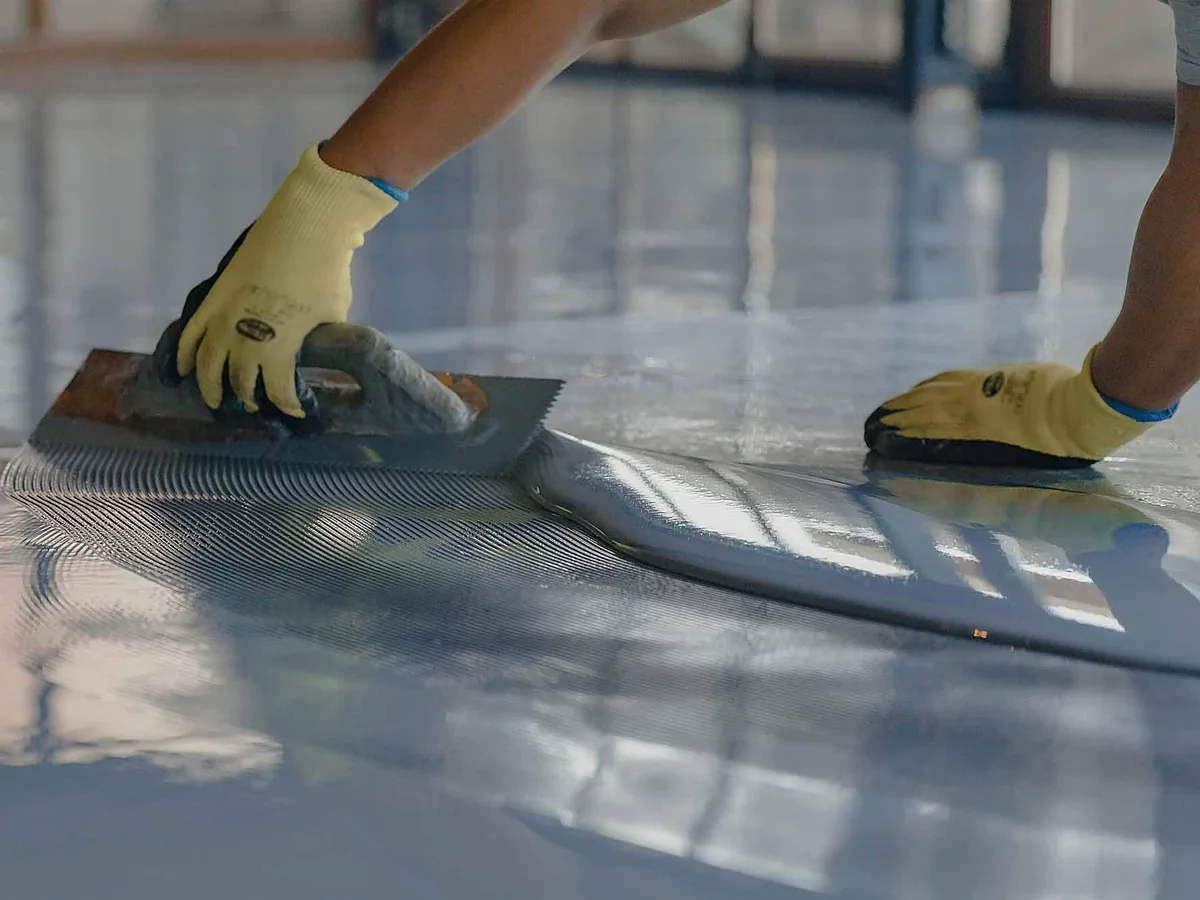
Next, the epoxy base coat goes on. While it is wet, sand is broadcast into it until it will not take any more. Once it dries, the loose sand is swept off and a topcoat seals the finish. Each coat goes on at the thickness the coating manufacturer calls for.
Sunlight is the first question. Epoxy can yellow in the sun, and epoxy data sheets suggest a topcoat over it to slow that. Even a UV-inhibited epoxy's data sheet warns of chalking and fading with long sun exposure. So our epoxy system stays indoors, and floors that take sun get polyaspartic.
Out of the sun, epoxy has strengths of its own. Its data sheets list chemical resistance, and the sand finish adds grip. That suits a home workshop or a laundry room.
Our sand finish epoxy also goes on business floors, like shop floors and service bays. Those jobs fall under our commercial floor coatings.
NOAA's normals for Lakeland, the nearest weather station, put about 34 of the year's 57 inches of rain in June through September. NRCS soil maps rate much of the ground around Lakeland as somewhat poorly to very poorly drained, with a water table that rises within 18 inches of the surface on about half of it for part of the year. That ground moisture can move up into a slab from below.
Excess moisture in a slab can make a coating blister or lose its bond. Coating makers generally require a moisture test before a coating goes on concrete. Soil varies lot by lot, here and across our service area. That is why the moisture test comes before the first coat.
Summer dew points across Central Florida run in the low 70s. Coating data sheets call for the slab to sit at least 5 degrees above the dew point. One epoxy data sheet warns that air in concrete expands as the day warms and can bubble the coating. So slab temperature and the dew point are checked before the epoxy goes on.
Call or text for a written quote. We work about 45 miles around Eagle Lake across Polk County and Four Corners.
(866) 282-7667From the first call or text to the finished work, here is how it goes.
Call or text (866) 282-7667, or send the form. Tell us which floor you want coated and the town it is in.
We look at the concrete, including cracks and any old sealer or coating. Then we recommend the system that fits.
Your free estimate comes in writing, with the work and the price spelled out. Once you say yes, we set a start date.
We grind the whole slab and fill the cracks before any coating goes on.
A base coat goes down, then the flake or the sand, then a topcoat. The coating manufacturer's schedule sets when you can walk on it and park on it.
Common questions about epoxy coatings around Eagle Lake and the rest of Polk County. If yours is not here, call or text and ask.
Our main garage floor system pairs a polyaspartic coating with a full flake broadcast. It cures fast and holds its color in the sun.
Learn More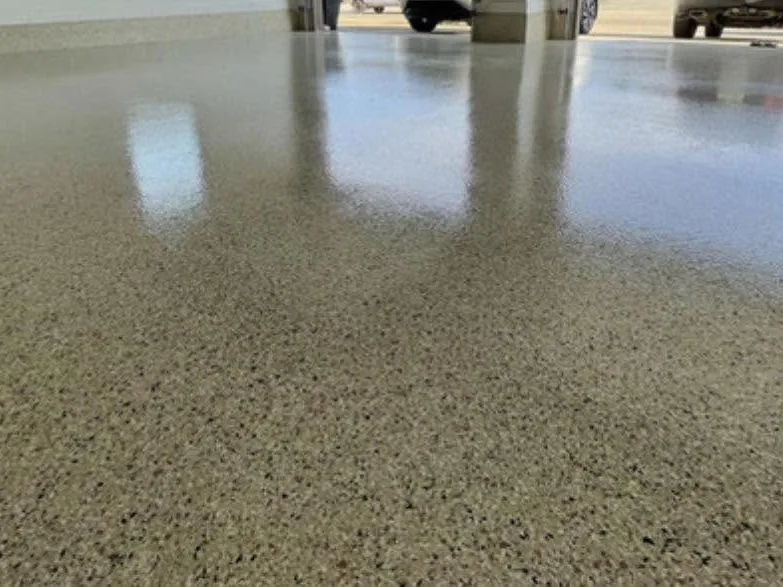
A full flake floor covers the slab in color chips, edge to edge, under a clear topcoat. Pick a flake blend to match your style.
Learn More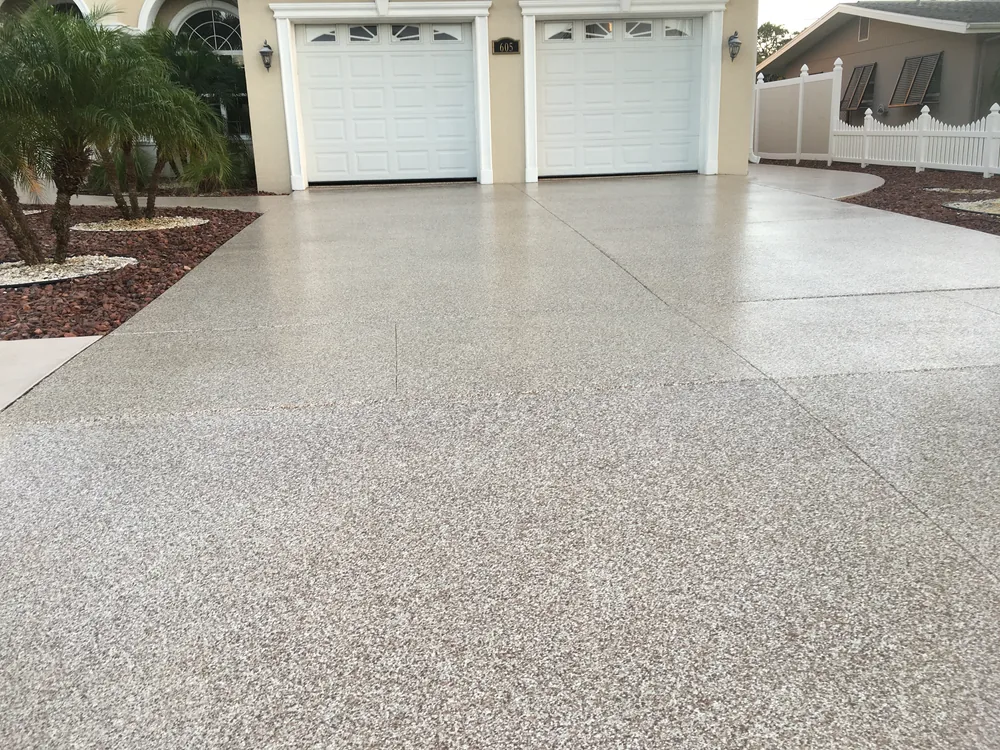
Polyaspartic flake coatings for concrete driveways and the slabs around them. A UV-stable topcoat and a textured finish suit Florida sun and rain.
Learn MorePolyaspartic full flake goes on garages, with a UV-stable topcoat. Epoxy with a sand finish goes on shop floors and workshops.
Every job starts with a look at the floor. Your free estimate then spells out the system and the price in writing.
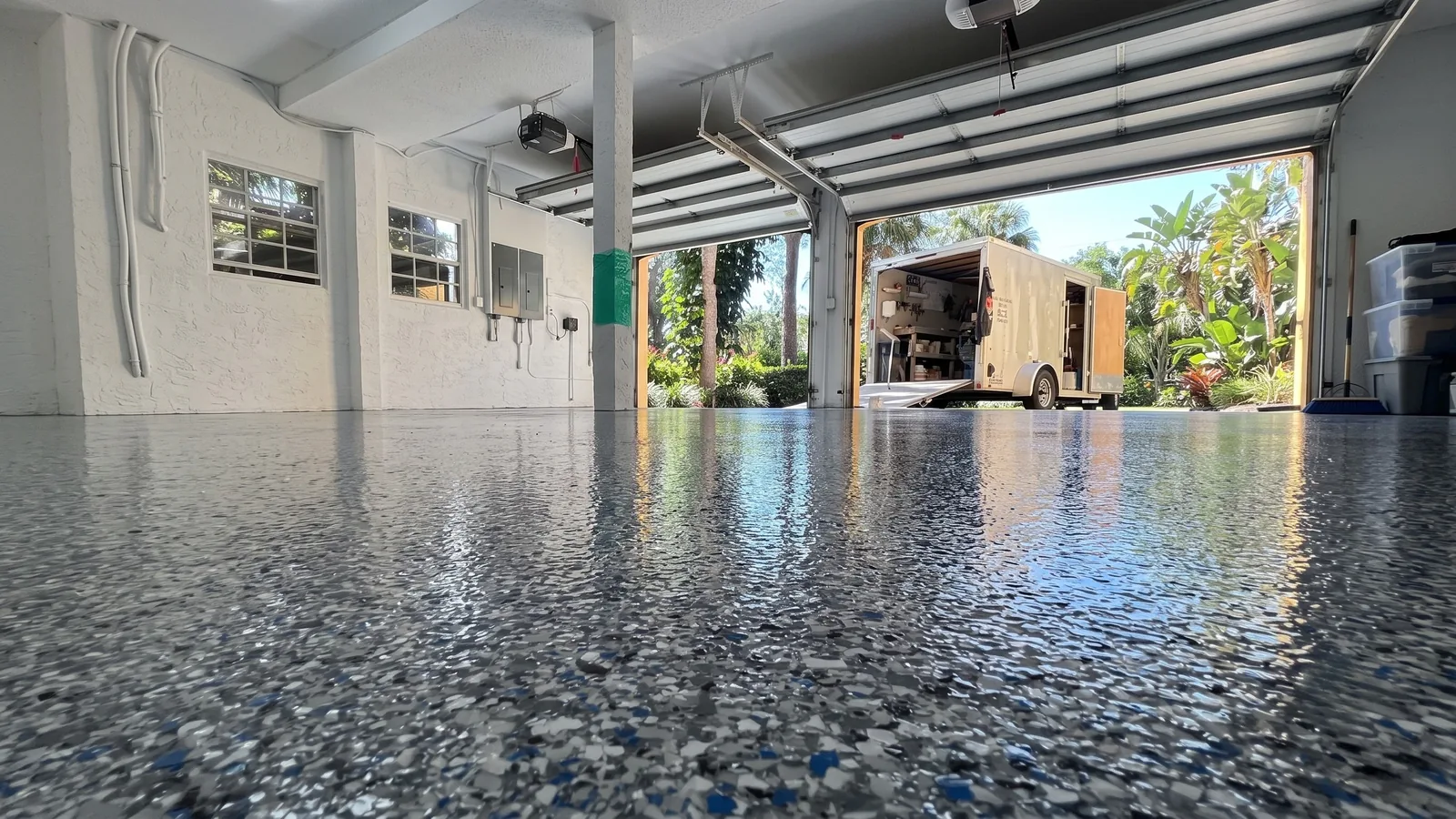
What a garage floor coating costs in Florida: market ranges for polyaspartic flake and epoxy by garage size, and what moves the price up or down.
Read more →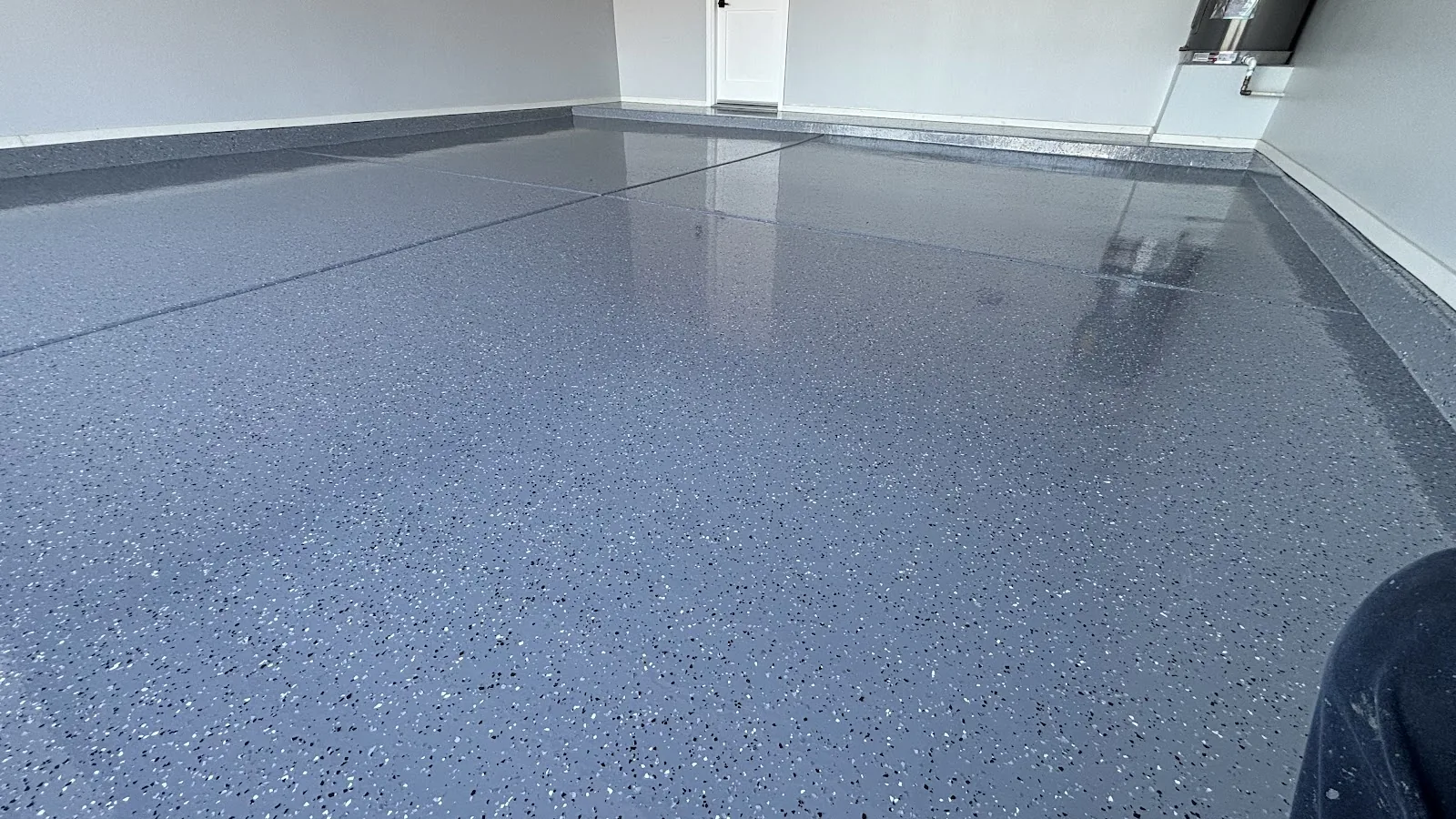
Polyaspartic vs epoxy for a Florida garage floor: cure time, UV yellowing, heat and humidity, hot tire pickup, thickness and market cost ranges.
Read more →Tell us about the floor you want coated and where the property is. Call or text (866) 282-7667 or use the form, and we will set up your free estimate.
Tell us about the garage, patio, driveway or shop floor and where it is. We look at the job and put your free estimate in writing.