
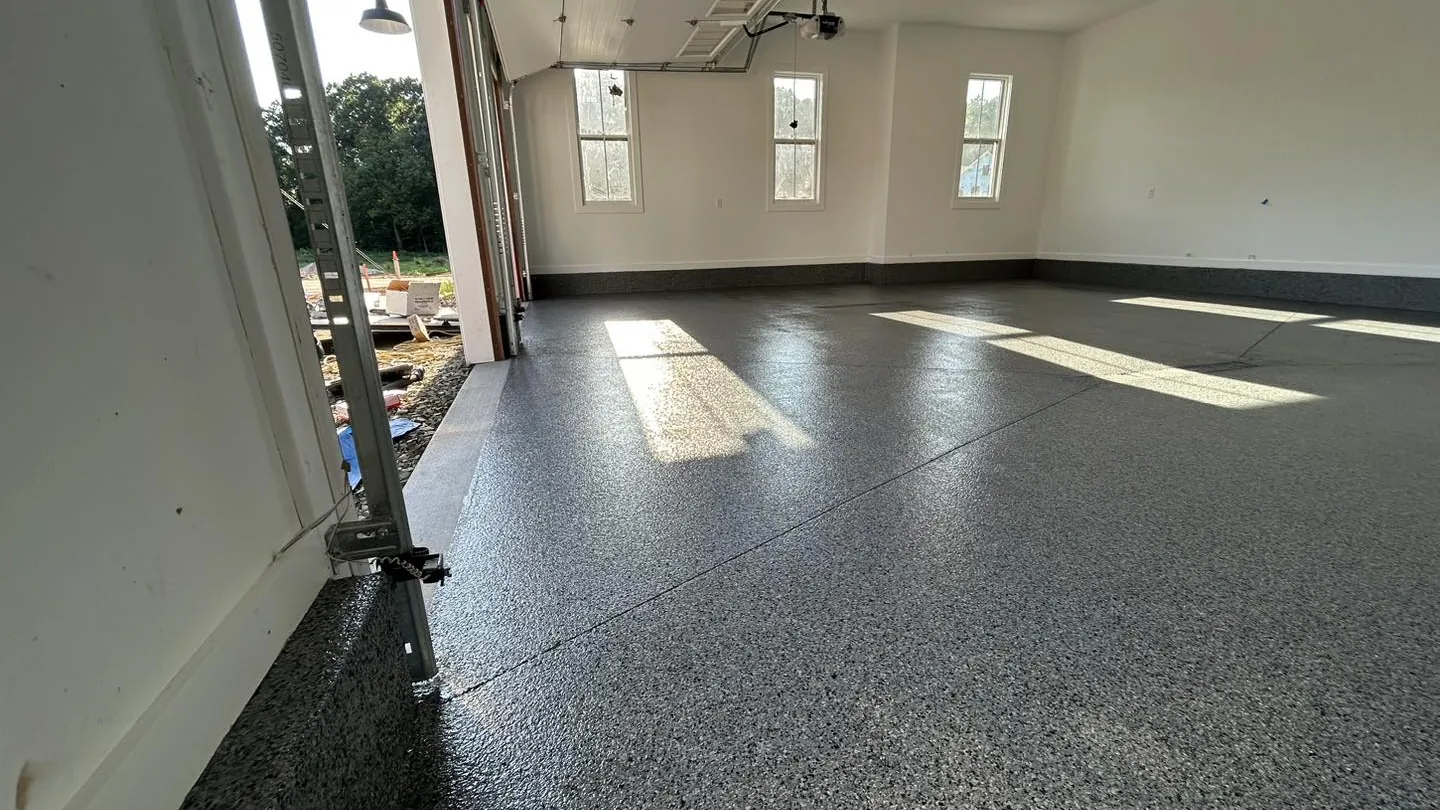
How Much Does It Cost to Coat a Concrete Driveway in Florida?
A national cost guide puts a professionally installed concrete coating at $4 to $12 per square foot. It uses one scale for any concrete coating, driveways included. A sealer runs about $1 to $3 per square foot, and resurfacing about $3 to $9.
These are market numbers from national guides, not our price list. We found no Florida figure for driveways in them. On a Florida driveway, the slab’s condition moves the number, and the climate shapes the system. Our driveway coatings page covers the work itself.
What do national cost guides say a driveway coating costs?
Per square foot, a sealer costs less than a coating in the guides we read. Resurfacing is concrete work, and the table shows it for comparison.
| Option for a concrete driveway | Published range per square foot | Where the range comes from |
|---|---|---|
| Concrete sealer | $0.85 to $3 | Two national cost guides |
| Any concrete coating, installed | $4 to $12 | One national cost guide |
| Epoxy coating | $4 to $10 | The same guide |
| Polyaspartic coating | $5 to $12 | The same guide |
| Resurfacing (a thin new layer of concrete) | $3 to $9 | Three national cost guides |
The sealer row spans two guides: $1 to $3 with cleaning in one, $0.85 to $2.13 in the other. The resurfacing guides run $3 to $5, $3 to $7 and $3 to $9.
For whole driveways, one guide’s sealing page prices two sizes. It compares acrylic or polyurethane sealers with epoxy or polyaspartic.
| Driveway size | Acrylic or polyurethane | Epoxy or polyaspartic |
|---|---|---|
| 500 square feet | $500 to $1,500 | $1,500 to $4,500 |
| 750 square feet | $750 to $2,250 | $2,250 to $6,750 |
That guide puts sealing a two-car concrete driveway at $575 to $1,700. A national guide’s epoxy page lists a 288 to 576 square foot driveway at $1,200 to $5,800. The Florida pages we found cover garage floors, not driveways, and land close to the national ranges. A home-services marketplace’s Orlando page puts a garage epoxy floor at $1,870 to $2,700 on average.
Does a driveway cost more to coat than a garage floor?
Not by the guides’ numbers. The guide behind the coating rows above prices any concrete coating on one scale. It names garage floors as the most common use, with driveways among the others.
What changes outside is the job the coating has to do. Epoxy data sheets warn of chalking and fading under long sun exposure. Polyaspartic data sheets list their coatings as UV-stable and resistant to yellowing. So a sunny driveway suits a polyaspartic coating system with a clear, UV-stable topcoat.
Color and grip matter outdoors too. A flake manufacturer advises against bold, bright colors outdoors, since they can fade early. NOAA’s normals give Lakeland about 57 inches of rain a year, about 60 percent of it from June to September. A flake broadcast gives the surface texture, and a slip-resistant topcoat or texture additive can add grip.
Water also rises from below. Polk County’s largest soil map unit is Smyrna and Myakka fine sands. NRCS says their water table sits within 18 inches of the surface for 1 to 4 months in most years. The ready-mixed concrete industry’s trade association says the soil under a slab measures close to 100 percent relative humidity.
Those needs shape the prep and the coats, and a moisture test comes before the first coat. The guides list prep, repairs, coats and moisture work as what moves a price. For the garage side of the math, read garage floor coating costs in Florida.
What does your driveway’s condition change?
A coating bonds to the concrete under it, so the slab comes first. One manufacturer’s system sheet calls for sound, structurally stable concrete.
- Cracks and small holes. These get filled as part of the prep. One national guide prices small driveway crack and hole repair at $100 to $400. A crack that still moves can show again.
- Heaving or crumbling concrete. That driveway needs concrete repair first, from a concrete contractor. One guide says extensive repairs can add $1 to $5 per square foot.
- An old sealer. It has to come off before the first coat, and grinding removes it. Water that beads up on the slab is a sign a sealer is still there.
- Oil and tire marks. A coating specification calls for oil and grease to be removed first. Oils from hot tires can seep so deep that grinding alone sometimes cannot remove them, a resin flooring maker says.
- Moisture. A slab that tests high gets a moisture-blocking primer, per coating makers. One guide prices moisture and hardness testing at $50 to $300.
- Slope and shape. One guide says flat driveways are easier to coat than steep ones, and irregular shapes may cost more.
- A new pour. Coating data sheets call for 28 to 30 days of cure before the first coat.
How do a sealer and resurfacing compare with a coating?
A sealer is a very thin layer that guards concrete against water and stains, one national guide explains. A coating is thicker and takes more traffic without scratching or wearing down. Its sealing page says epoxy or polyaspartic costs up to 3 times more and lasts the longest.
A coating system is built in layers on ground concrete. One manufacturer’s flake system sheet lists a base coat, a full flake broadcast and a clear topcoat. It puts the finished thickness at 35 to 50 mils, and a mil is a thousandth of an inch.
Resurfacing uses a thin layer of concrete to patch chips and fill cracks, a national guide explains. The same guide says it will not fix a sagging slab. A slab too damaged to resurface has to be replaced. Both are jobs for a concrete contractor, and they come before any coating.
So which one fits your driveway? A sealer costs less up front and wears off sooner. A coating suits a sound slab that should look finished and grip in the rain. A sagging or broken slab needs concrete work before either one.
What is the next step for your driveway?
A published range only goes so far. We look at your driveway and put a free estimate in writing. We grind the concrete and fill the cracks first. Then a polyaspartic flake coating goes down with a UV-stable topcoat and a textured finish.
Read how we coat a concrete driveway for the full process. Patios and lanais take a textured finish too, through our patio coatings. We work across Polk County and the Four Corners side of Central Florida. Call or text (866) 282-7667 to set up your estimate.